Understanding MSRP, the Key to Smarter Car Buying
Published on Jan 23, 2025 • 4 min read
Modified At: Jan 16, 2026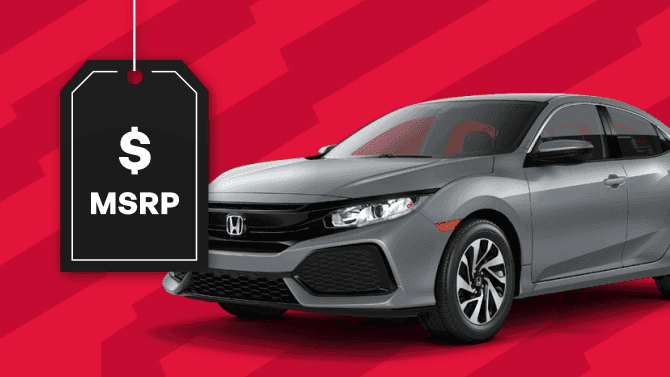
When you buy a car, the final price takes into account many factors. Including the cost of making the car, the profit the manufacturer gains, its wholesale price, and, if you’re purchasing the car from a dealership, the profit that the dealership makes.
It’s important for you to educate yourself on all of these as a potential buyer, as it can help you leverage the negotiation process. One of the most important pricing terms to understand is MSRP, which we’ve detailed for you in this guide.
What Is MSRP?
MSRP stands for Manufacturer Suggested Retail Price. To put it simply, it’s a price that car manufacturers deem a specific car should be sold at so that everyone involved makes a reasonable profit. Basically, manufacturers are saying, “This is what we think this car should sell for; anything far beyond this starts to get excessive.” So, it’s a way to offer consumers protection.
That said, the keyword here is “suggested.” Dealerships aren’t required to sell a car at MSRP, as a dealer may choose to sell a vehicle above or below MSRP, depending on market conditions, demand, and availability.
Why Does MSRP Matter When You’re Buying a Car?
The MSRP matters for you as a potential buyer because it helps you create a starting point for what a car is actually worth.
Additionally:
- It gives you a baseline so prices don’t feel random and you have a clear reference for what’s considered reasonable.
- It helps you spot when a car is being discounted, fairly priced, or marked up beyond what the manufacturer intended.
- It gives you leverage during negotiations.
Knowing the MSRP helps you ask better questions, understand why a price is higher or lower than expected, and decide whether a deal makes sense for your budget.
Is a Car Always Sold Above MSRP?
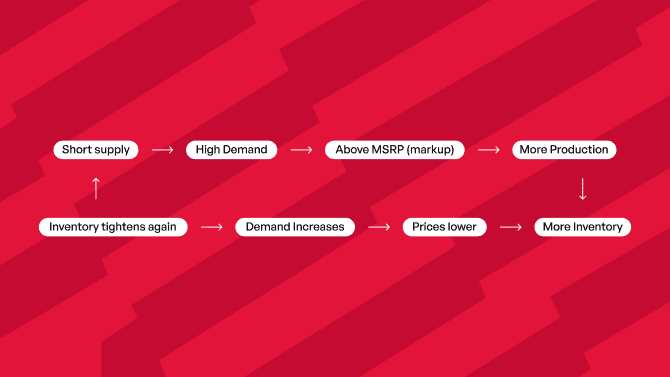
No, actually, it’s the opposite. Most of the time, dealers sell cars below MSRP, either because there’s plenty of inventory or because the price is lowered through negotiation. However, this changes when a car is in high demand and low supply.
To illustrate this, imagine Toyota launches a brand-new model that has just hit the market and is getting a lot of attention. In the early stages, only a limited number are available, for example, 10 units at local dealerships, while 50 buyers are actively trying to get one.
Since demand far outweighs supply, dealers have little reason to lower the price. In fact, pricing the car above MSRP allows them to manage demand and sell to buyers who are willing to pay more to secure the vehicle sooner. The good news is that cars don’t stay above MSRP forever, which means buyers who are willing to wait often regain leverage as supply catches up with demand.
MSRP VS Invoice Price
As mentioned previously, the MSRP is a suggested retail price set by the manufacturer. But the invoice price is what the dealership pays for the car. For example, if a car’s MSRP price is $35,000 and the dealer bought it for $32,000, then that’s the invoice price. The difference between those two numbers helps cover the dealer’s operating costs and leaves room for profit.
In addition to this, other terms circle the MSRP that might be confusing, so you can find those detailed in this chart below:
Frequently Asked Questions
Is the MSRP the final price of a vehicle?
No. The MSRP is not the final price you’ll pay for a car. The final amount is often referred to as the out-the-door price, which includes taxes, registration, documentation fees, and any dealer-added extras. Financing terms and trade-ins can also affect the final number. This is why two buyers can pay very different prices for the same car, even if both start at the same MSRP.
Is the MSRP the same as the sticker price?
No, they are not the same. The sticker price is the total price shown on the vehicle’s window label and usually includes the MSRP plus mandatory destination fees, dealer-installed options, and other additional charges. This is why the sticker price you see at a dealership is often higher than the base MSRP listed by the manufacturer.
How much off the MSRP can I negotiate?
It depends heavily on the vehicle, the market, and timing. Factors that can affect how much room there is to negotiate include: -How long the car has been sitting on the lot -The popularity of the model and trim -Seasonal sales or manufacturer incentives -Whether the model year is ending
Does the MSRP matter if I’m leasing the car?
Yes, MSRP still matters for leases, even though you’re not buying the car outright. MSRP is often used to calculate the vehicle’s residual value, which plays a major role in determining your monthly payment. A higher MSRP can sometimes result in a higher residual, which may help lower lease payments, depending on the terms.
Does MSRP apply to used cars?
No. MSRP only applies to new vehicles. Used cars are priced based on market value, condition, mileage, and demand.
Should I pay more than the MSRP?
Paying above MSRP isn’t automatically wrong, but it should be a deliberate choice, not a surprise. You can decide to pay above MSRP if: -The vehicle is in very short supply. -You need the car immediately. -Comparable options are unavailable.
Related Articles
How Long Do Car Batteries Last? Everything You Need to Know
side. A dead car battery is one of the most common reasons for cars...
Feb 6, 2025 • 5 min read
Common Problems With Traction Control
Did you know that nearly 70% of modern vehicles come equipped with traction control systems (TCS)? This technology...
Oct 10, 2024 • 5 min read
What Is The Best Time to Buy Tires?
Tires are essential for your vehicle’s safety, performance, and fuel...
Oct 31, 2024 • 4 min read

How Long Should You Let Your Car Warm Up? (And Why Less Is More)
For most modern vehicles, allowing your car to idle for 30 seconds to one minute is generally sufficient...
Feb 13, 2025 • 4 min read